How a New Driveway Can Transform Your Home’s Kerb Appeal in Ivybridge and South Devon
April 16, 2026
Tarmac vs. Block Paving: Which Driveway Surface Is Right for Your Devon Home?
May 6, 2026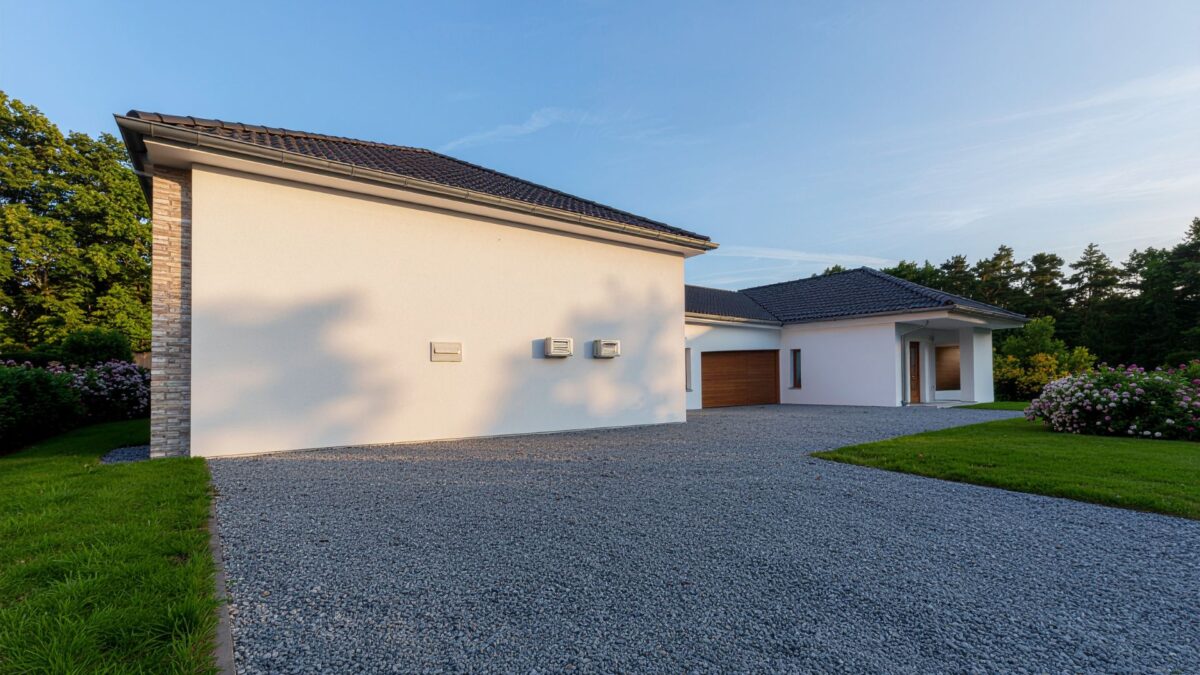
Gravel is one of those driveway options that splits opinion. Some people love it — it looks natural, it’s affordable, and the crunch underfoot is one of the more satisfying sounds in domestic life. Others have tried it and regretted it within a year.
The truth is that gravel driveways work brilliantly in the right situation and are a poor choice in the wrong one. If you’re considering gravel for your home in Plymouth, Newton Abbot, Totnes or anywhere across Devon, here’s what actually matters.
The Genuine Advantages of Gravel
Cost is the obvious one. Gravel is substantially cheaper to install than block paving, tarmac or resin — typically running from around £20 to £40 per square metre for supply and lay, depending on the type of stone and the groundworks involved. For a large rural driveway in Devon, the saving over an alternative surface can run to several thousand pounds.
Drainage is the next big advantage. Gravel is inherently permeable — water soaks straight through, so there’s no pooling, no runoff onto the road, and no planning permission implications. This makes it SuDS compliant by default, which matters for front garden driveways.
Security is also worth mentioning. Gravel is noisy to walk on. Anybody approaching your front door on a gravel drive creates an audible signal that hard surfaces don’t. It’s a small point but a genuine one, particularly for properties set back from the road.
Finally, it looks good when it’s done well. The right gravel in the right setting — particularly rural Devon properties, older houses with stone walls or brick piers — has a naturalness that poured or manufactured surfaces can’t replicate.
The Honest Drawbacks
Gravel migrates. This is the main practical problem, and it’s worth being direct about it. Gravel moves under foot traffic, car tyres and gravity. On a flat or gently sloped driveway with good containment and a proper geotextile membrane underneath, this is manageable. On a steep drive, or one without proper edging, gravel ends up on the road, in the garden and inside the house within months.
Weeds are the other reality. A geotextile membrane slows weed growth significantly, but it doesn’t eliminate it permanently. Ground elder and bindweed in particular seem to find their way through eventually. A gravel driveway that isn’t maintained will start looking unkempt within a few years.
Other practical considerations:
- Gravel isn’t suitable for wheelchair or mobility aid users — the unstable surface is genuinely difficult to move across
- It can be harder to keep clean — leaves, mud and debris accumulate and are harder to remove than on a hard surface
- Snow and ice management is more difficult on gravel than on a smooth surface
- Gravel scuffs on shoe soles and wheels into the house more than you’d expect
What Makes a Good Gravel Driveway
The quality of a gravel driveway depends primarily on the groundwork rather than the gravel itself. The key elements are:
- Proper excavation — typically 100mm to 150mm depth — to create a stable base
- A compacted sub-base layer, usually MOT Type 1 or similar, to prevent sinking
- A quality geotextile membrane to suppress weeds and separate the gravel from the sub-base
- Appropriate edging — board, block, brick or metal — to contain the gravel and maintain clean lines
- The right stone — angular, crushed aggregate binds better underfoot than smooth pea gravel, which moves freely
What Type of Gravel Works Best in Devon?
In Devon, a few aggregate types are particularly popular:
- Pea gravel — round, smooth stones in natural colours. Cheap, attractive, but the most prone to migration. Best for decorative areas rather than active driveways
- 20mm crushed granite — angular stones that lock together better underfoot. A practical working driveway choice
- Self-binding gravel — a mix of fine particles and aggregate that compacts to a firmer surface. More stable than loose gravel and gives a cleaner finish
- Cotswold stone and other buff limestone blends — popular for their warm colouring, which suits Devon’s warmer-toned brick and stone properties
Is Gravel Right for Your Property?
Gravel works best for: properties with flat or very gently sloping driveways, rural locations where natural materials look at home, situations where budget is the primary constraint, and homeowners happy to do occasional maintenance.
It works less well for: steep driveways, properties with young children or pushchairs (gravel collects in prams and wellies at an extraordinary rate), anyone with mobility considerations, or homeowners wanting a zero-maintenance solution.
If you’re unsure, it’s worth getting a gravel quote alongside quotes for resin or tarmac to see how the costs compare for your specific driveway size. The difference is sometimes smaller than people expect.
Free Quotes from RM Driveways
We install gravel driveways across Devon — from Plymouth and Ivybridge through to Newton Abbot, Totnes and the South Hams. We’re happy to advise honestly on whether gravel is the right choice for your driveway, or whether an alternative surface might serve you better.
Call 01364 712353 for a free, no-obligation quote and site survey.